ADVANCED MANUFACTURNG

Content about manufacturing methods and highly engineered products by Chuck Frey

Additive manufacturing

How BMF is using Digital Source from Markforged to enable global part distribution

Markforged Digital Source enables companies to create a digital warehouse that acts as an electronic inventory for their customers to securely purchase spare parts to print on demand.

Bernstein points out that Digital Source and Markforged printers are an excellent choice for BMF’s customers because they’re intuitive and easy to use. BMF began digitizing certain parts of its inventory with Markforged Digital Source, which provides each Twister customer access to a digital warehouse containing B

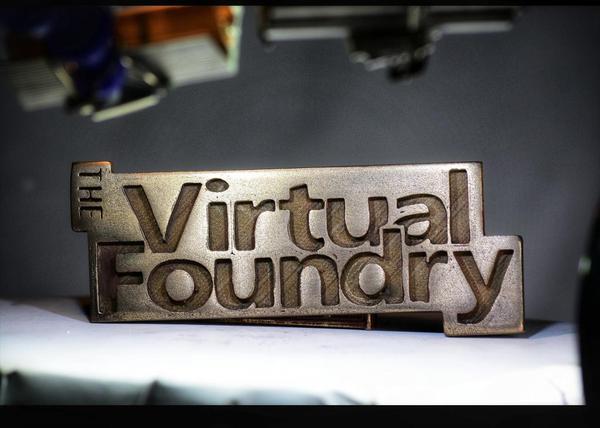
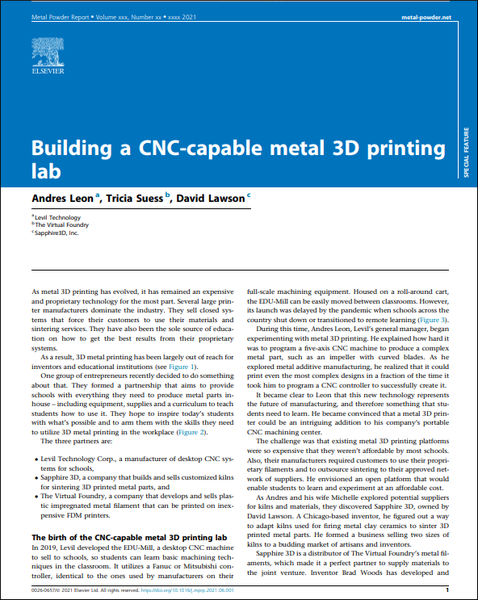
New plasma atomization reactor enables The Virtual Foundry to expand its range of exotic metals

As part of The Virtual Foundry’s continuing efforts to help its customers develop unique materials with exceptional physical properties for additive manufacturing, the advanced material science company has acquired a plasma atomization reactor.

This device uses plasma to melt and atomize metal, creating small, uniform, dense and spherical metal powders that are ideal for additive manufacturing. The Virtual Foundry uses them to create plastic impregnated filament via its patented process, which

Injection molding

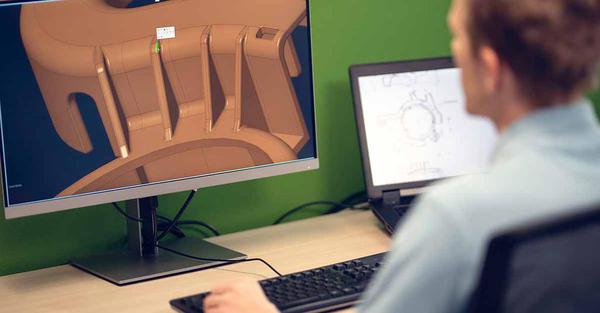
Expect more from your mold flow analyses

Two of the major objectives a molder has entering a project are to preserve the material properties the customer is seeking and to produce a part to print. Mold flow analysis (MFA) is a critical tool for designing successful parts and tools for plastic injection molding. But it’s only as good as the expertise of the team conducting it, and their ability to interpret the data it generates.

A well-designed and analyzed MFA can help you build tooling that consistently produces high-quality parts a

Beyond PPAP: How NBP streamlines the project launch process

While the Production Part Approval Process (PPAP) is a common method injection molders use to ensure a new part meets expectations, New Berlin Plastics takes additional steps to streamline the entire project launch process.

These extra steps provide efficiencies that often result in parts being approved and moved into production faster, saving time and cost for OEMs.

“We take these exhaustive process verification and validation steps to give OEMs a robust production process that is both in con

Finishing and post-processing

CNC machining

Metal cutting and forming

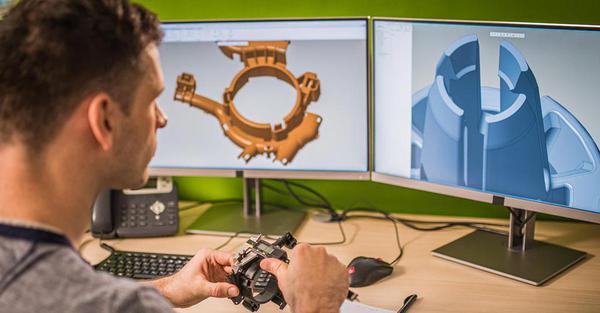
Design, engineering and DFM support

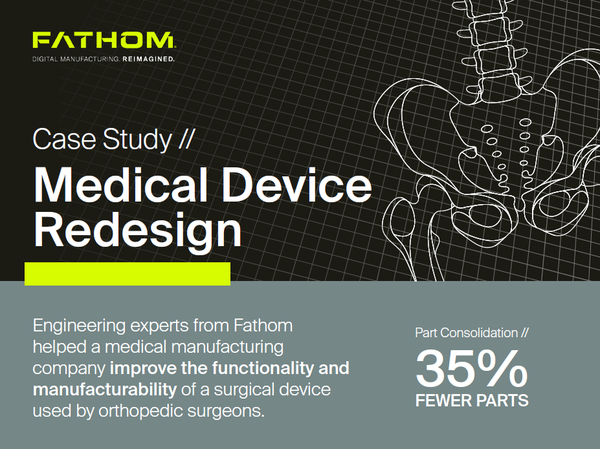
Engineering & Design Support | Fathom

When you partner with an outside firm to have parts manufactured, top-notch engineering is a critical requirement. There are many variables involved in producing affordable parts that are consistently high quality – including part design, manufacturing method, material selection, manufacturability, advanced prototyping and designing efficient production processes. This web page outlines Fathom's extensive design and engineering services.

Adding value upfront with DFM

For many types of engineered products, the sooner you can discover and solve design and manufacturability problems, the better. Nowhere is this more true than in plastic injection molding. High-quality molded parts require a perfect synergy between part design, mold design, and molding processes.

That’s why New Berlin Plastics conducts a preliminary design for manufacturability (DFM) analysis during the part quoting process. Its purpose is to obtain an overview of the design intent, the applica

How a design review can help you avoid part quality problems

Conducting a design review early in your part design process is a critical step to avoid manufacturing and quality problems later.
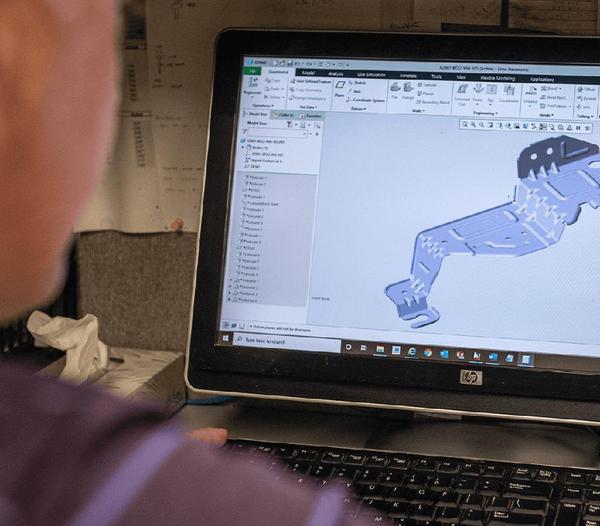
What is a design review? A comprehensive analysis of your part and tooling design to optimize them for manufacturability. It also involves deciding on the most cost-effective material and process to produce your parts.
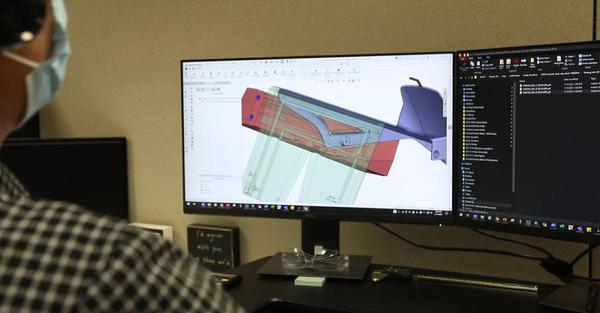
Why do you need to do a design review? Because your part and tool designs may contain features that could significantly add to the cost of your part

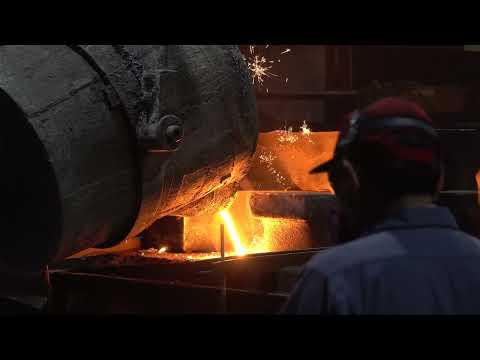
Metal casting

How to avoid common casting design mistakes

As older design engineers retire, a new wave of young engineers are taking their places. What many younger engineers lack is an understanding of casting design – how to design parts so they can be cast with a consistently high level of quality.

We recently sat down with Jeff Taylor, a casting engineer at The C.A. Lawton Co., to learn about common casting design mistakes and how you can avoid them.

Lawton: What design issues do OEM engineers tend to be focused upon?

Taylor: There are four main

How to make sure your castings measure up

One of the basic principles used in reviewing a casting design is Geometric Dimensioning & Tolerancing (GD&T). This is a system for defining and communicating engineering tolerances through the use a symbolic language on engineering drawings. It explicitly describes the part geometry and its allowable variations.

Using GD&T is one of the best ways for the customer’s design engineer, the supplier’s manufacturing engineer and the quality inspectors from both organizations to reach consensus on a

How engineering relationships lead to better casting project outcomes

“Are you kidding me? There’s no way to make that!”

If you’re in the business of making something, you’ve been on one side of this statement or the other. Either you’ve heard it, or you’ve said it. I’ll admit as an engineer I’ve experienced both throughout my career. It’s a crushing statement for all:
• To the design engineer, this is a blow to their creation. Months of crazy hours from idea to CAD design are gone with a simple statement.
• To the purchasing agent, a mountain of stress appears o

Iron 101 teaches the magic and science of modern casting

Old world ingenuity. Cutting-edge science. Two worlds that appear to be mutually exclusive.

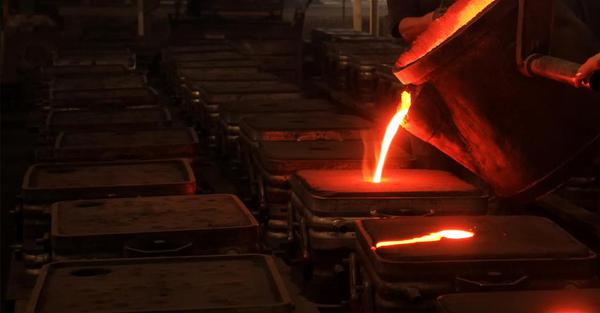
But they blend together perfectly at The C.A. Lawton Co., where engineers and craftspeople create high-quality, high-performance castings for some of the world’s most demanding OEMs. At a recent Iron 101 workshop, OEM design engineers and procurement people got a first-hand education on the art and science of modern ductile and gray iron castings. They came away with a much deeper appreciation of these f

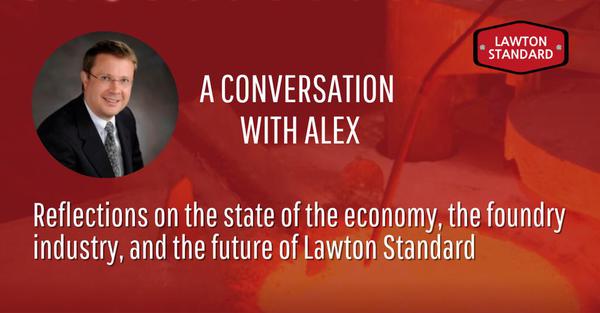
A Conversation with Alex: Reflections on the state of the economy, the foundry industry, and the future of Lawton Standard

The last three years have been a wild roller coaster ride. From COVID-19 and supply chain issues to a roaring recovery and global uncertainty, it’s been one of the most challenging times in recent memory.

But the challenges also contain seeds of opportunity. Despite the disruption, we’ve been making steady progress toward building a new model for serving the needs of our marketplace and its stakeholders.

Let’s look closer at where we are now and where we’re headed as a company.

I’m an amateur

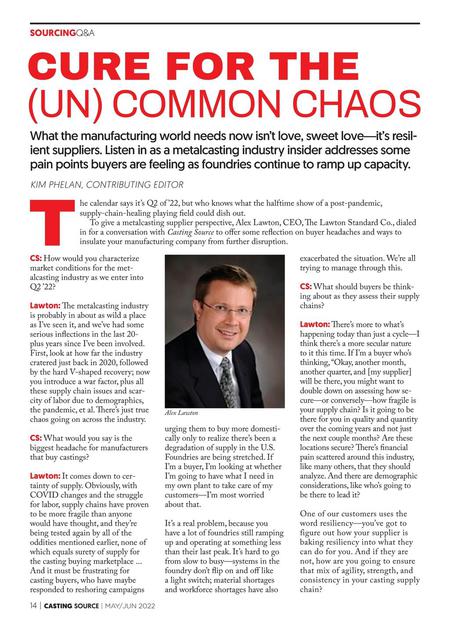
Casting Source May/June 2022 Page 14

SOURCING Q&A CURE FOR THE (UN) COMMON CHAOS What the manufacturing world needs now isn’t love, sweet love Ñ it’s resil-ient suppliers. Listen in as a metalcasting industry insider addresses some pain points buyers are feeling as foundries continue to ramp up capacity. KIM PHELAN, CONTRIBUTING EDITOR he calendar says it’s Q2 of ’22, but who knows what the halftime show of a post-pandemic, supply-chain-healing playing field could dish out. To give a metalcasting supplier perspective, Alex Lawton,